
 by Kim, Lahey & Killough Law Firm
Five attorneys named 2027 Best Lawyers, Doug Kim Patent Lawyer of Year
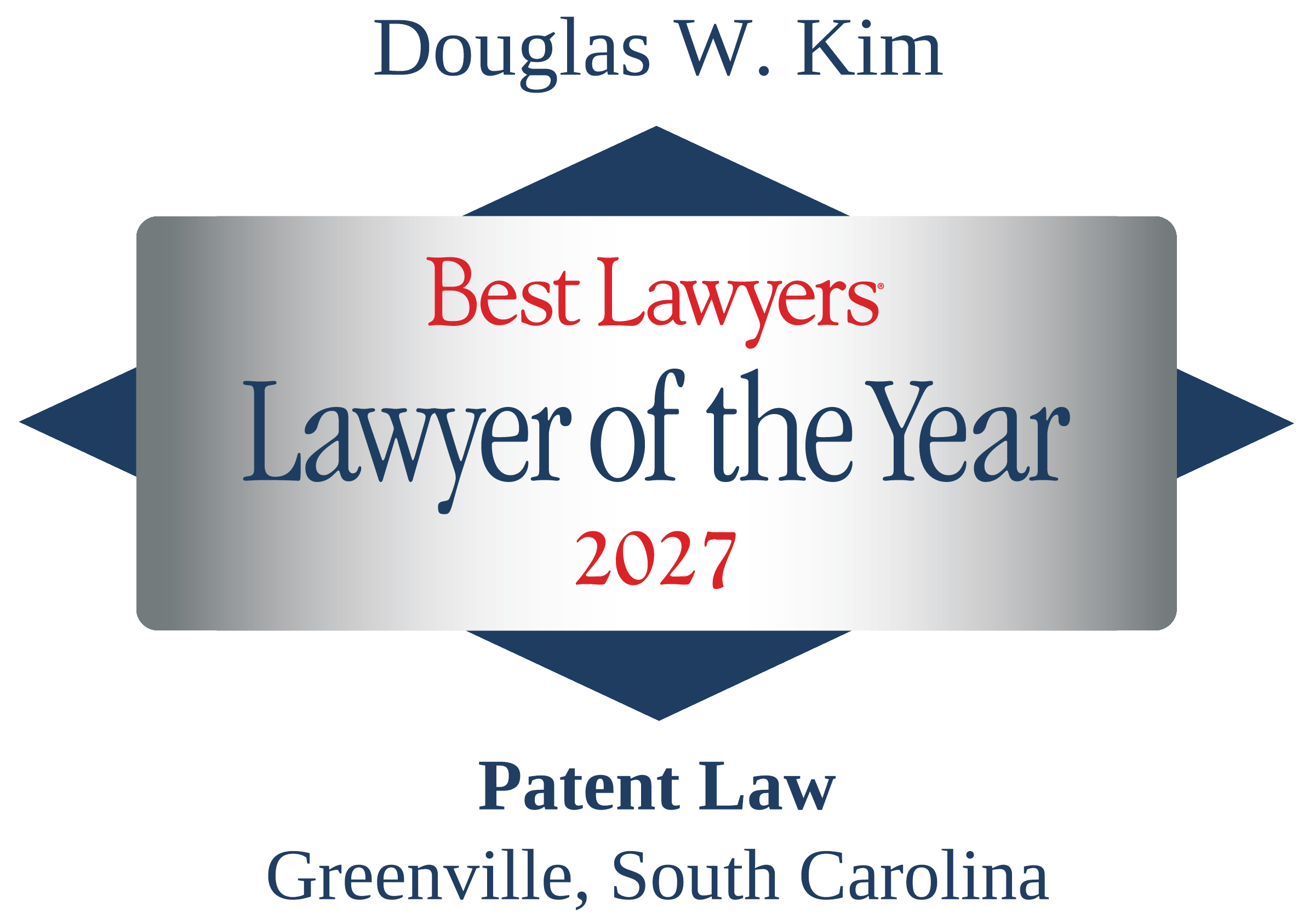
Doug Kim named 2027 Patent Law “Lawyer of the Year”
Five Kim, Lahey & Killough attorneys recognized by Best Lawyers
Kim, Lahey & Killough Law Firm is pleased to announce that firm founder Douglas W. Kim has been named the 2027 Patent Law “Lawyer of the Year” in Greenville, SC, by Best Lawyers, his third time earning the “Lawyer of the Year” distinction. The honor headlines a strong showing for the firm, which has five attorneys listed in The Best Lawyers in America® 2027 edition, along with firm-wide recognition for its intellectual property and trademark practices. 
In Greenville, Kim is recognized in the 33rd edition of The Best Lawyers in America® for his work in patent law, trade secrets law, trademark law and litigation of IP and patent matters. This year’s Patent Lawyer of the Year title adds to two previous Lawyer of the Year honors: Trademark Lawyer of the Year in 2022 and Patent Lawyer of the Year in 2019 for the Greenville metro market.
Firm co-founder Seann Lahey joins the list again this year, recognized for his work in patent law and trademark law.
Hunter S. Freeman is commended for his work in litigation in commercial, intellectual property, and patent matters, copyright law, and trademark law.
Also in Greenville, Sara Kanos is recognized for her work in litigation – intellectual property and trademark law. Kanos was named the 2026 Trademark Lawyer of the Year for the Greenville metro.
In the firm’s Charleston office, B. C. Killough marks his 18th year on the Best Lawyers list, recognized for his work in business organizations (including LLCs and partnerships), corporate law, intellectual property litigation, patent law, and trademark law. Killough was named Corporate Law Lawyer of the Year for the Charleston metro in 2015.
“Seeing Doug named Patent Lawyer of the Year is a proud moment for this entire firm,” said Seann Lahey, co-founder of Kim, Lahey & Killough. “We’re honored to be recognized by both our clients and our peers through Best Lawyers: that kind of recognition tells us our work is being noticed both in the courtroom and in the way we serve our clients every day. And the fact that all five of us recognized this year are registered patent attorneys actively practicing in the IP space speaks to the technical and legal bench we’ve built here, as well as to our ongoing commitment to excellent client service.”
Best Lawyers also recognized Kim, Lahey & Killough among South Carolina’s top-listed firms this year. The firm is top-listed in South Carolina for both intellectual property litigation and in trademark law.
Since 1983, The Best Lawyers in America has compiled and reviewed peer evaluations from across the United States to identify its annual list of honorees, recognizing only the top 5% of lawyers in the nation.
About Kim, Lahey & Killough
Kim, Lahey & Killough is a South Carolina-based law firm focused on intellectual property, technology, and business law, with offices in Greenville and Charleston. The firm’s attorneys counsel clients in the creation, protection, enforcement, commercialization, and strategic management of intellectual property assets, including patents, trademarks, copyrights, trade secrets, licensing, technology transactions, and intellectual property litigation and related business interests.
The firm serves entrepreneurs, startups, manufacturers, technology companies, healthcare innovators, and established businesses throughout the United States and internationally. Kim, Lahey & Killough is known for its client-centered approach, combining technical, business, and legal experience to help clients protect innovation, build competitive advantages, and achieve business objectives
 by Kim, Lahey & Killough Law Firm
All firm attorneys named 2026 Legal Elite
All Kim, Lahey & Killough attorneys listed as
2026 Legal Elite by Charleston Business and Greenville Business Magazines
 Kim, Lahey & Killough is proud to announce that for the second consecutive year, every attorney in the firm has been named to the 2026 Legal Elite lists published in Greenville Business Magazine and Charleston Business Magazine.
“To have our entire team recognized by their peers is a remarkable honor,” said firm founder Doug Kim. “Each member of our team brings decades of real-world experience and deep industry knowledge, former computer programmers, law professors, and business owners who understand not just the law, but the challenges business owners face every day. That combination of experience is something our clients and the colleagues we collaborate with have come to rely on.”
The attorneys and their accolades are as follows:
Doug Kim, IP and Innovation
Seann Lahey, IP and Innovation, featured on page 68
Bill Killough, IP and Innovation
Hunter Freeman, IP and Innovation, as well as both Corporate Law and Mediation
Sara Kanos, IP and Innovation
Robert Merting, IP and Innovation
Emily Bohan, Corporate Law – Business Organization
The 2026 Legal Elite were selected through peer nominations from attorneys throughout the state of South Carolina in 50 legal practice areas.
The firm is featured on pages 12 (B.C. Killough Chambers USA recognition), 52, 64, 65, 66 (B.C. Killough noted as top recipient in Coastal Region) and 68 (feature profile of Seann Lahey, top recipient in Upstate Region) of the publications. 
About Kim, Lahey & Killough
Kim, Lahey & Killough is a South Carolina-based law firm focused on intellectual property, technology, and business law, with offices in Greenville and Charleston. The firm’s attorneys counsel clients in the creation, protection, enforcement, commercialization, and strategic management of intellectual property assets, including patents, trademarks, copyrights, trade secrets, licensing, technology transactions, and intellectual property litigation and related business interests.
The firm serves entrepreneurs, startups, manufacturers, technology companies, healthcare innovators, and established businesses throughout the United States and internationally. Kim, Lahey & Killough is known for its client-centered approach, combining technical, business, and legal experience to help clients protect innovation, build competitive advantages, and achieve business objectives.
 by Kim, Lahey & Killough Law Firm
Greenville Top Lawyers TALK Magazine
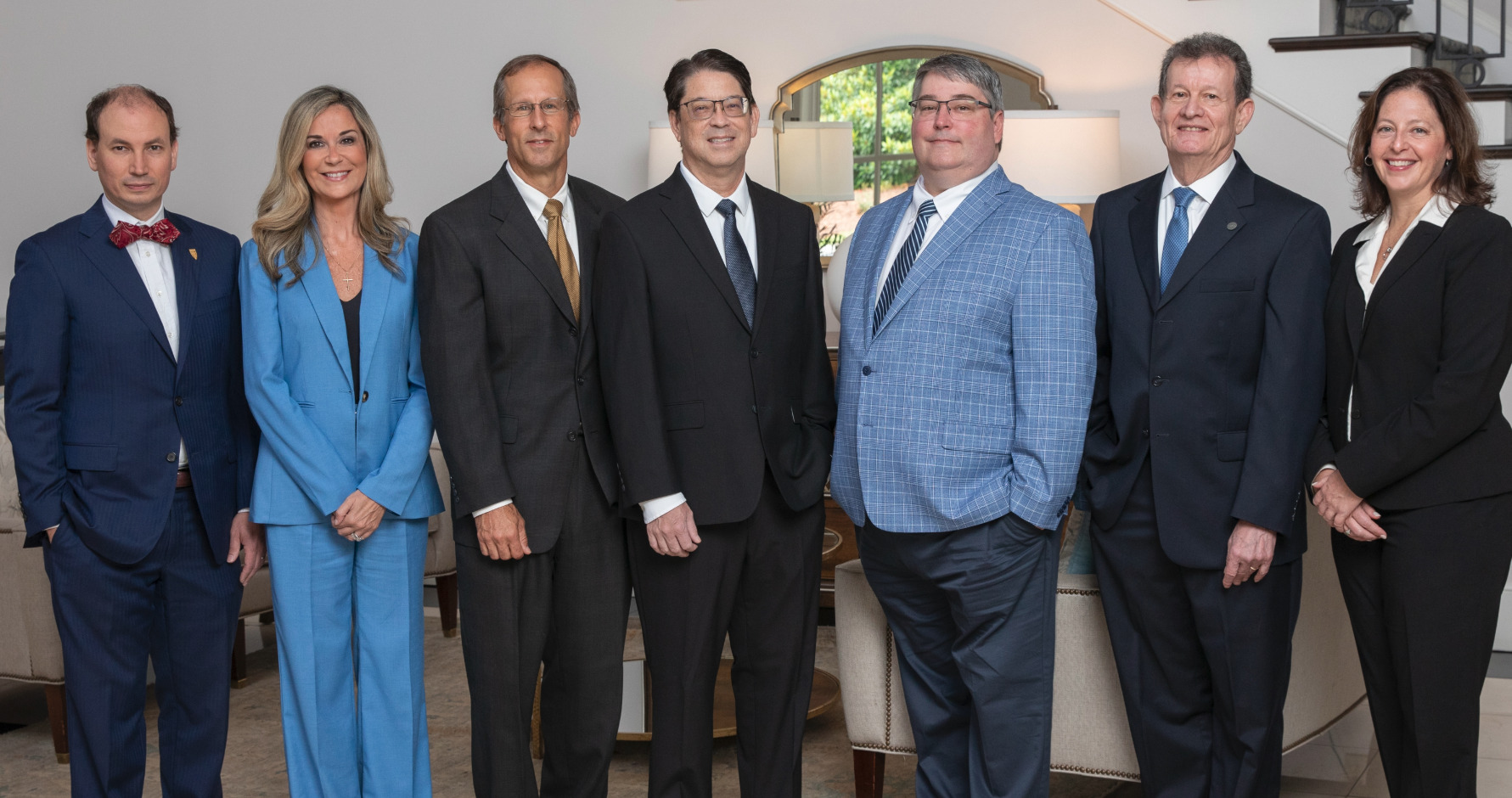
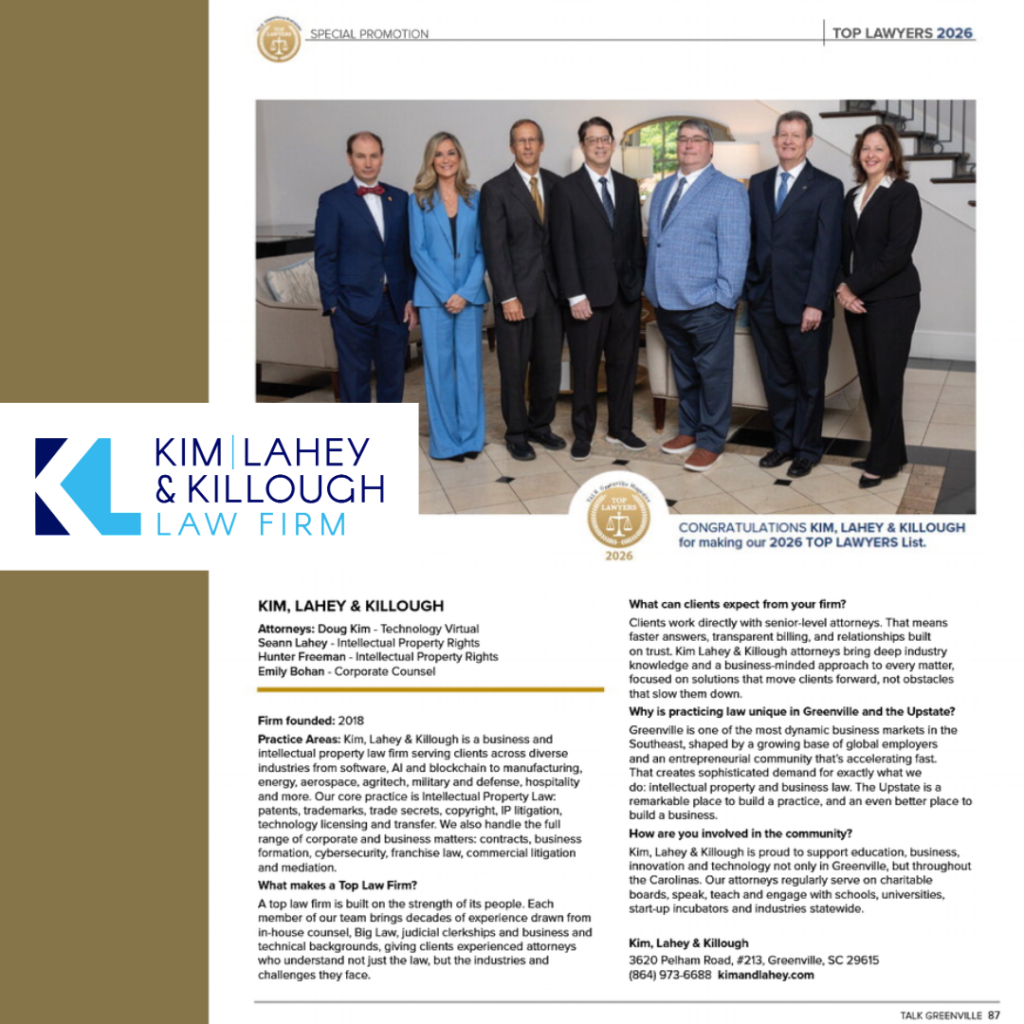
Kim, Lahey & Killough is once again honored to be named Greenville Top Lawyers in this year’s Greenville TALK Magazine list. Doug Kim was named to the list for his work in Technology Virtual, Seann Lahey and Hunter Freeman for their work in intellectual property and Emily Bohan was recognized for her work as corporate counsel for her business clients. The firm’s profile, pictured below, may be found on page 87 of the August 2026 issue, found online here.
 by Kim, Lahey & Killough Law Firm
Chambers USA Intellectual Property South Carolina
Kim, Lahey & Killough Earns Ranking in Chambers USA for Intellectual Property Law in South Carolina
B.C. Killough Receives Individual Recognition
 Kim, Lahey & Killough is proud to announce its recognition for expertise in intellectual property law in the 2026 edition of Chambers USA. The firm was ranked among the state’s leading intellectual property law practices, with Charleston-based attorney B.C. (Bill) Killough earning an individual ranking. Killough is one of only six intellectual property attorneys recognized statewide by Chambers USA in the 2026 guide.
Widely considered the most prestigious and influential attorney-ranking organization globally, London based Chambers identifies leading lawyers in their respective practice areas through a rigorous research process that includes client interviews, peer and competitor feedback, representative case matters, technical legal ability, depth of experience, client service and evaluation of professional accomplishments.
“We are honored that Chambers USA has recognized both our firm and Bill Killough,” said firm founder Seann Lahey. “What makes this recognition especially meaningful is that it is grounded in client feedback. Our clients trust us with innovations, brands, technologies, and business assets that are critical to their success. This ranking reflects the dedication of our entire team and reinforces our commitment to delivering practical, strategic counsel that helps clients achieve their business objectives.”
The Chambers USA ranking reflects the firm’s long-standing commitment to helping businesses establish, protect, enforce, and leverage intellectual property assets. With offices in Greenville and Charleston, Kim, Lahey & Killough represents clients ranging from entrepreneurs and emerging companies to established domestic and international businesses across industries including software, manufacturing, engineering, biotechnology, medical devices, consumer products, telecommunications, and finance. The firm’s intellectual property practice encompasses patents, trademarks, copyrights, trade secrets, licensing, technology transactions, and intellectual property litigation.
Based in the firm’s Charleston office, Killough is a registered patent attorney with more than three decades of experience counseling businesses and professionals across the full spectrum of intellectual property law.
About Kim, Lahey & Killough
Kim, Lahey & Killough is a South Carolina-based law firm focused on intellectual property, technology, and business law, with offices in Greenville and Charleston. The firm’s attorneys counsel clients in the creation, protection, enforcement, commercialization, and strategic management of intellectual property assets, including patents, trademarks, copyrights, trade secrets, licensing, technology transactions, and intellectual property litigation and related business interests.
The firm serves entrepreneurs, startups, manufacturers, technology companies, healthcare innovators, and established businesses throughout the United States and internationally. Kim, Lahey & Killough is known for its client-centered approach, combining technical, business, and legal experience to help clients protect innovation, build competitive advantages, and achieve business objectives. For more information, visit the firm website at kimandlahey.com.
About Chambers USA
Chambers USA is published annually by Chambers and Partners, a London-based research organization founded in 1990 and widely regarded as the world’s most authoritative legal ranking service. The guide ranks attorneys and law firms across all 50 states and at the national level, spanning hundreds of practice areas. Rankings are determined through an independent and in-depth research process that includes thousands of confidential interviews with in-house counsel, clients, and peer attorneys each year. Attorneys are evaluated on technical legal ability, professional conduct, client service, commercial astuteness, diligence, and commitment. Rankings are not self-nominated nor purchased, they are earned through independent verification. A Chambers USA ranking is among the most sought-after recognitions in the legal profession and is frequently consulted by general counsel and business clients when selecting outside legal counsel.
 by Kim, Lahey & Killough Law Firm
Sara Kanos joins Kim Lahey Killough Greenville Office
Kim, Lahey & Killough Welcomes Intellectual Property Attorney Sara Kanos
 Kim, Lahey & Killough Law Firm is pleased to announce the addition of intellectual property attorney Sara C. Kanos to the firm’s Greenville, SC, office. Kanos brings more than two decades of intellectual property experience to the firm, with a practice spanning patents, trademarks, copyrights, trade secrets, and internet-related matters. Her work encompasses patentability analysis, trademark clearance, infringement assessment, and licensing and contractual arrangements, offering clients a strategic, big-picture approach to managing intellectual assets across their full lifecycle. Originally from Bergamo, Italy, Kanos is fluent in Italian and brings an international perspective to cross-border IP matters.
Kanos is widely recognized for her work in intellectual property law. She was named the Best Lawyers in America® 2026 “Lawyer of the Year” in Trademark Law for the Greenville metro market and has been listed in Best Lawyers for both Intellectual Property Litigation and Trademark Law continuously since 2018. She has also been named to South Carolina Legal Elite for her work in Intellectual Property and Innovation and recognized as a Top Lawyer by TALK Greenville Magazine.
An active voice in the IP community, Kanos has authored and lectured on intellectual property issues for legal, business, and innovation audiences. She previously served as Chair of the South Carolina Bar’s Intellectual Property and Unfair Competition Committee, is a Leadership Greenville alumna and is an engaged member of the Greenville technology and entrepreneurship ecosystems.
“We are thrilled to welcome Sara Kanos to the firm,” commented firm founder Doug Kim. “Sara is exactly the kind of attorney that defines Kim, Lahey & Killough: someone who came up through larger firms, built a distinguished career, and brings that depth of experience to bear for clients who deserve big-firm caliber counsel in a boutique setting. Sara’s exceptional credentials, her scientific background, and her remarkable record in trademark and patent matters make her a perfect complement to what we have built here.”
A biochemist by training, Kanos holds a Bachelor of Science and Master of Science in Biochemistry from Furman University, where her research included pharmaceutical synthesis and the study of DNA-interactive compounds. She applies that deep scientific background directly to her IP practice, most notably in patent prosecution and technical analysis. She earned her Juris Doctor from the University of South Carolina School of Law and is admitted to practice before all South Carolina courts, the United States Court of Appeals for the Fourth Circuit, the United States District Court for the District of South Carolina, and the United States Patent and Trademark Office.

About Kim, Lahey & Killough
With offices in both Greenville and Charleston South Carolina, the Kim, Lahey & Killough Law Firm provides strategic legal solutions to businesses of all sizes in the areas of intellectual property creation and protection, brand protection, invention protection, copyright, licensing, intellectual property litigation, trade secrets, software protection, internet and e-commerce issues, corporate formation, contracts, and business disputes and mediation resolutions.
 by Kim, Lahey & Killough Law Firm
IP attorneys named in 2026 South Carolina Super Lawyers
Kim, Lahey & Killough Attorneys Named to 2026 South Carolina Super Lawyers List
 Kim, Lahey & Killough is pleased to announce that four of its attorneys have been recognized in the 2026 South Carolina edition of Super Lawyers, a legal ranking published by Thomson Reuters.
Patent attorneys Doug Kim, Seann Lahey, B.C. Killough, and Hunter Freeman have each been named among the state’s top-rated intellectual property attorneys.
Charleston-based attorney B.C. Killough marks his 12th consecutive year of recognition for his work in intellectual property law in the publication and in Greenville, SC IP attorney and firm founder Doug Kim celebrates his 10th year of recognition.
Super Lawyers, part of Thomson Reuters, is a rating service of outstanding lawyers from more than 70 practice areas who have attained a high degree of peer recognition and professional achievement. Super Lawyers recognizes no more than five percent of the lawyers statewide each year.
About Kim, Lahey & Killough
With offices in both Greenville and Charleston South Carolina, the Kim, Lahey & Killough Law Firm provides strategic legal solutions to businesses of all sizes in the areas of intellectual property creation and protection, brand protection, invention protection, copyright, licensing, intellectual property litigation, trade secrets, software protection, internet and e-commerce issues, corporate formation, contracts, and business disputes and mediation resolutions.
 by Kim, Lahey & Killough Law Firm
CIPA in South Carolina
California’s Privacy Law Reaches South Carolina
 A 1967 California wiretapping statute is creating unexpected legal exposure for businesses far outside the Golden State, including right here in South Carolina. In an article published in South Carolina Lawyer, Kim, Lahey & Killough attorney Emily Bohan and University of South Carolina School of Law student Max Young explain how the California Invasion of Privacy Act (CIPA) has been repurposed to target common website tools like tracking pixels, session replay software, chatbots, and analytics platforms.
CIPA’s core requirement is that all parties to a communication must consent before it is recorded. This is significantly more strict than federal law and most state statutes. Plaintiffs are now arguing that third-party scripts embedded on websites function as illegal wiretaps, and courts have been receptive. Critically, recent decisions make clear that consent mechanisms must be triggered before any tracking begins, meaning the standard practice of loading scripts on page arrival, before a user can click “accept,” may already constitute a violation.
The reach of CIPA has expanded beyond California’s borders. In Briskin v. Shopify, the Ninth Circuit found that collecting and monetizing data from California residents was enough to establish personal jurisdiction, even for a Canadian company with no California office. The “capability test” emerging from Ambriz v. Google adds another layer of risk: vendors that merely retain the ability to use client data for their own purposes (such as training AI models) may not qualify for otherwise available defenses that could shield them from liability.
Steps Businesses Should Take Now
- Affirmative consent mechanisms should fire before any tracking scripts load.
- Sensitive data fields should be masked on the client side so raw inputs never leave the user’s browser.
- Vendor contracts must explicitly prohibit data monetization and secondary use and should include robust indemnification clauses covering privacy and wiretapping claims.
- Regular technical audits are essential to catch unauthorized third-party trackers before plaintiffs do.
Excerpt:
Wiretapping in the Digital Age: How an Old Law in California is Reaching into South Carolina
The National Expanse of California Privacy Law
For many attorneys in South Carolina, the notion that a California state law enacted in 1967 regulating industrial espionage and wiretapping could impose significant liability on a manufacturing firm in Greenville or a hospitality group in Charleston may seem farfetched. Yet, the California Invasion of Privacy Act (CIPA) has been repurposed to target modern tracking technologies. What began as a statute designed for technology running on copper wires may now apply to website pixels, chatbots, and session replay soft-ware, creating a minefield of potential liability for companies nationwide.
This expansion presents a unique threat to entities outside of California, including those here in the Palmetto State. Due to the borderless nature of the internet and aggressive jurisdictional theories, South Carolina businesses and other non-California entities are increasingly finding themselves appearing in California courts. The core of this liability lies in CIPA’s strict “all-party consent” requirement. Unlike federal law and other state statutes that permit recording with the consent of one party involved in a communication, CIPA requires the consent of all parties to a communication before recording is permitted. Consequently, the undisclosed use of third-party tracking scripts may lead to both criminal and civil penalties with significant statutory damages, and this law has already caught many businesses off guard.
The full article, including a detailed review of the relevant case law and practical compliance steps, is available in the Spring issue (page 27) of South Carolina Lawyer.
Emily Bohan is an attorney at Kim, Lahey & Killough’s Greenville, SC office, focusing her legal practice on business formation, corporate law,franchise law and mediations. She is licensed to practice in both South Carolina and Virginia. Max Young is a J.D. candidate, Class of 2026, at University of South Carolina.


 by Kim, Lahey & Killough Law Firm
Hunter Freeman Named Leader in the Law by South Carolina Lawyers Weekly
Hunter Freeman Named Leader in the Law by South Carolina Lawyers Weekly
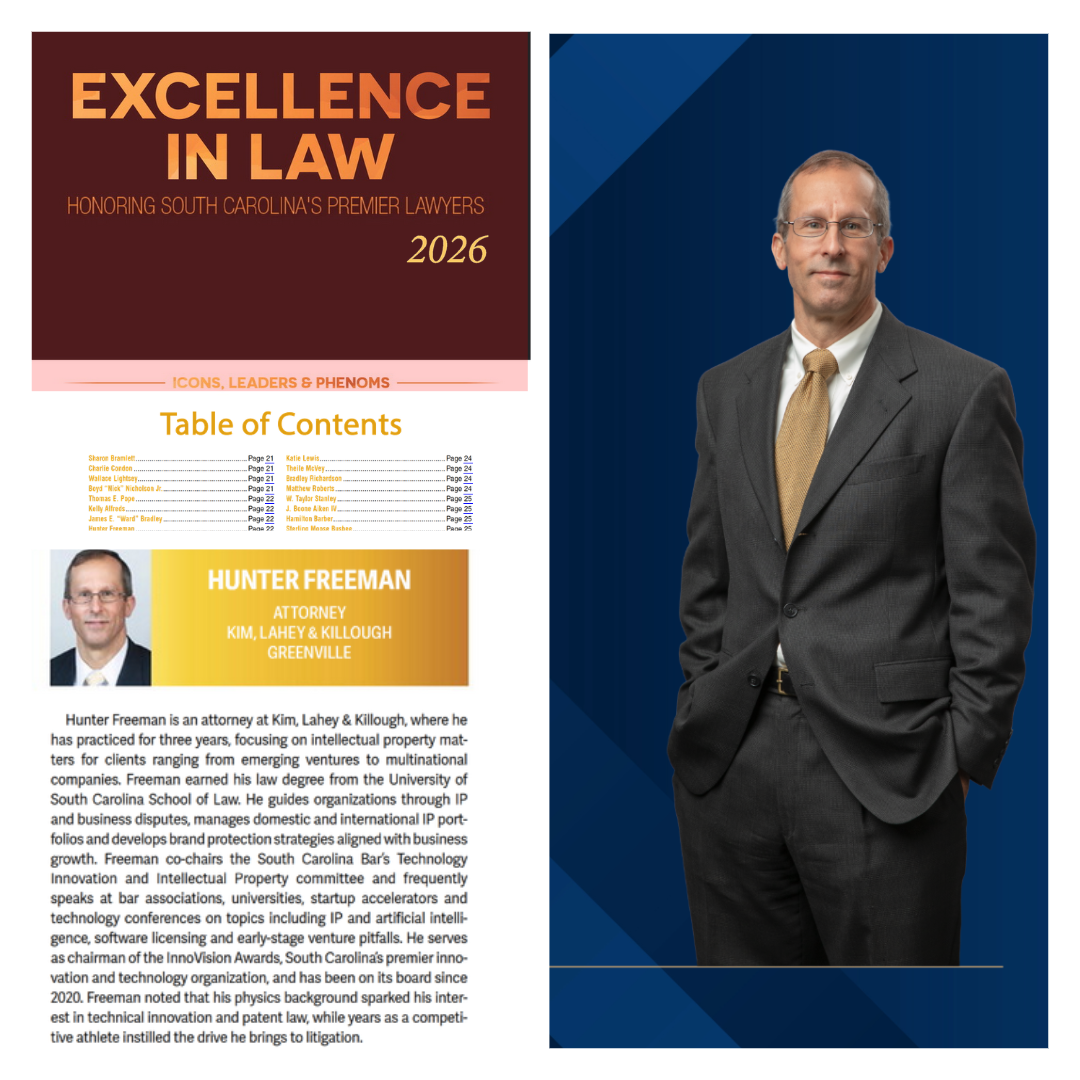
 Kim, Lahey & Killough is pleased to announce that attorney Hunter Freeman has been named a Leader in the Law by South Carolina Lawyers Weekly as part of the publication’s 2026 Excellence in Law list, which honors South Carolina’s Premier Lawyers.
Freeman focuses his 20+ years law practice on intellectual property matters, serving clients ranging from emerging ventures to multinational companies. He guides organizations through complex IP and business disputes, manages domestic and international IP portfolios, and develops brand protection strategies aligned with long-term business objectives.
In addition to his legal practice, Hunter Freeman serves as Chairman of the InnoVision Awards, South Carolina’s premier organization for the advancement of innovation and technology. He also co-chairs the South Carolina Bar‘s Technology Innovation and Intellectual Property committee and has contributed to regional initiatives through the Upstate SC Alliance Global Cities Initiative Steering Committee and the Greenville Bar Executive Committee. He is a frequent speaker at universities, startup accelerators, and technology conferences on topics including IP and artificial intelligence, software licensing, and emerging technology.
Hunter Freeman adds this recognition to a growing list of honors, including listings in The Best Lawyers in America across four categories: Litigation – Intellectual Property, Commercial Litigation, Trademark Law, and Copyright Law; recognition from Greenville Business Magazine‘s Legal Elite of the Upstate, South Carolina Super Lawyers, and TALK Greenville’s Top Lawyers for his work in Intellectual Property matters.
A graduate of the University of South Carolina School of Law, Freeman’s undergraduate degree is in physics. When asked by the publication to how his background had influenced your career he commented “I was a physics major and a competitive athlete. The former sparked my interest in technical and scientific innovation, which led me to patent law. The latter gave me a competitive drive that I bring to litigation.”
“Receiving this recognition is meaningful, but what matters most is helping entrepreneurs and businesses protect and grow what they’ve built,” said Freeman. “South Carolina has a vibrant innovation economy, and I’m proud to play a role in supporting it.”
About Kim, Lahey & Killough
With offices in both Greenville and Charleston South Carolina, the Kim, Lahey & Killough Law Firm provides strategic legal solutions to businesses of all sizes in the areas of intellectual property creation and protection, brand protection, invention protection, copyright, licensing, intellectual property litigation, trade secrets, software protection, internet and e-commerce issues, corporate formation, contracts, and business disputes and mediation resolutions.
 by Kim, Lahey & Killough Law Firm
Doug Kim Named Legal Innovator Finalist 2026 Southeastern Legal Awards
Doug Kim Named Legal Innovator Finalist for 2026 Southeastern Legal Awards
 Kim, Lahey & Killough is pleased to announce that founding attorney Doug Kim has been named a Legal Innovator Finalist for the 2026 Southeastern Legal Awards, presented by ALM’s Law.com and The Daily Report. This recognition honors attorneys across North Carolina, South Carolina, Georgia, Mississippi, Louisiana, Alabama, and Tennessee who have made a meaningful impact on the legal community. The Legal Innovator distinction specifically recognizes attorneys who are advancing and re-imagining the practice of law. This recognition reflects Doug’s continued commitment to innovation in the legal profession and the firm’s broader mission to deliver forward-thinking legal solutions to its clients.
As former Chairman of both the South Carolina Bar’s Intellectual Property & Innovation Committee and the state’s InnoVision Awards, Doug has worked to educate both the legal and business communities on AI’s growing role in practice and commerce. His recent South Carolina Bar CLE on AI and the law drew over 400 attorneys, the highest attendance for any Bar program since before the pandemic. His broader educational reach includes features on Fox News affiliate broadcasts and South Carolina Public Radio’s Business Review, as well as published articles in the American Bar Association’s Litigation Newsletter and South Carolina Lawyer magazine.
Grounded in a physics degree from Davidson College and an early career as a software engineer, Doug has long anticipated technological change, helping secure some of South Carolina’s earliest blockchain and AI patents on behalf of clients while building a boutique IP practice. Indeed, Kim, Lahey & Killough has been named the state’s Best Intellectual Property Law Firm by Integrated Media Publishing, and Doug has been named among South Carolina’s 50 Most Influential People by the group. Doug has previously been recognized as Best Lawyers’ Patent Lawyer of the Year and Trademark Lawyer of the Year for the Greenville market, and South Carolina Super Lawyers, Legal Elite and TALK Magazine Top Lawyers name him for his work in intellectual property.
We celebrate Doug Kim’s commitment to education, and dedication to elevating the entire profession through his thought leadership and innovation, and congratulate him on this well-deserved recognition.
With offices in both Greenville and Charleston South Carolina, the Kim, Lahey & Killough Law Firm provides strategic legal solutions to businesses of all sizes in the areas of intellectual property creation and protection, brand protection, invention protection, copyright, licensing, intellectual property litigation, trade secrets, software protection, internet and e-commerce issues, corporate formation, contracts, and business disputes and mediation resolutions.
 by Kim, Lahey & Killough Law Firm
Welcome Max Young, legal extern
Welcome Max Young to our Team
 We are delighted to introduce Max Young, a third-year student at the University of South Carolina Joseph F. Rice School of Law, who joins us as a legal extern this semester. A Lexington, Kentucky native and Indiana University alum, Max was drawn to South Carolina not only for the warm weather but also for the law school’s growing emphasis on technology and innovation in the legal field, a focus that matches quite well with Kim, Lahey & Killough’s law practice.
Max brings hands-on experience from his work as a law clerk at the South Carolina Department of Natural Resources, where he collaborated with the CISO and Assistant General Counsel on information security policies, and as a research assistant focusing on AI policy and its ethical implications under the Model Rules of Professional Conduct. Max is eager to help our team produce practical insights on leveraging AI to enhance legal efficiency while maintaining ethical obligations like client confidentiality.
When he’s not researching data privacy regulations or analyzing AI governance frameworks, you might find Max traveling, hiking, celebrating Indiana University football with friends (what a year to be an IU fan!), or returning to his unique hobby of blacksmithing. We’re excited to have Max’s enthusiasm, technical knowledge, and fresh perspective as part of our firm this semester.
 by Kim, Lahey & Killough Law Firm
Doug Kim named to South Carolina 50 Most Influential list
Kim Lahey & Killough Firm Founder Doug Kim named to South Carolina 50 Most Influential list
 Kim Lahey & Killough is proud to announce that its firm founder, Doug Kim, has been named to Integrated Media Publishing’s inaugural list of the Statewide 50 Most Influential People in South Carolina. Honorees were chosen through extensive staff research by the publications group as well as community nominations for their work across the Palmetto State.
A former computer programmer and software engineer, intellectual property attorney Doug Kim has assisted in securing some of the earliest blockchain and AI patents in South Carolina. In addition to his own successful law practice, he has built a law firm that has grown to be South Carolina’s go-to boutique firm for intellectual property matters, providing legal solutions and strategies tailored to each client from start-ups to multinational corporations.
Doug is a leader in the state’s technology ecosystem, most recently serving as Chair of South Carolina’s InnoVision Awards. He is a frequent speaker and trusted authority on AI, technology and intellectual property matters throughout the state.
In addition to this recognition, Doug has previously been named to the South Carolina 500 list by SC Biz; the TALK Greenville Top Lawyers list in the area of Technology Virtual; he has been named by Best Lawyers® as Trademark Lawyer of The Year and Patent Lawyer of The Year for the Greenville metro market; Greenville Business Magazine has named him a Legal Elite of the Upstate; South Carolina Super Lawyers® lists him as a Top Rated Intellectual Property Attorney; and Managing Intellectual Property magazine has previously named him as an “IP Star.”
With offices in both Greenville and Charleston South Carolina, the Kim, Lahey & Killough Law Firm provides strategic legal solutions to businesses of all sizes in the areas of intellectual property creation and protection, brand protection, invention protection, copyright, licensing, intellectual property litigation, trade secrets, software protection, internet and e-commerce issues, corporate formation, contracts, and business disputes and mediation resolutions.
 by Kim, Lahey & Killough Law Firm
Doug Kim named to SC Biz South Carolina 500 list
Founding attorney Doug Kim named to SC Biz South Carolina 500 list
 Kim Lahey & Killough is pleased to announce that our firm founder Doug Kim has been named to the South Carolina 500 list by SC Biz. The South Carolina 500 is SCBIZ’ first-ever list of The Palmetto State’s most influential and impactful leaders in business, nonprofits, government and higher education. Featured in the December 2025 issue of the publication, South Carolina honorees in law are listed here.
Doug Kim started his career as a computer engineer after earning his Physics degree at Davidson College. After earning his law degree and working close to two decades as an intellectual property attorney, he founded Kim and Lahey with Seann Lahey in Greenville. The firm, now Kim, Lahey & Killough, has offices in both Greenville and Charleston and was recently honored as South Carolina’s Best Intellectual Property Law Firm by statewide business publications.
In addition to his work as an intellectual property attorney, Doug serves as a South Carolina certified mediator, is a regular speaker and author on topics including intellectual property, artificial intelligence, innovation and their intersection with law. Doug serves as Chair of South Carolina’s InnoVision Awards and previously chaired the South Carolina Bar Technology, Innovation and IP Committee.
With offices in both Greenville and Charleston, SC, Kim, Lahey & Killough Law Firm is devoted to helping clients establish, enforce, and leverage their intellectual property rights from the Upstate to the Lowcountry to across the globe. The firm serves the manufacturing, software, energy, finance, hospitality, tourism, defense, agriculture and technology industries as well as universities. Key practice areas include intellectual property, business and commercial litigation, mediation, employment, corporate and business matters including formation and structure, mergers and acquisitions, contracts, and cybersecurity.

 by Kim, Lahey & Killough Law Firm
Kim Lahey Killough named Best Intellectual Property Law Firm in South Carolina
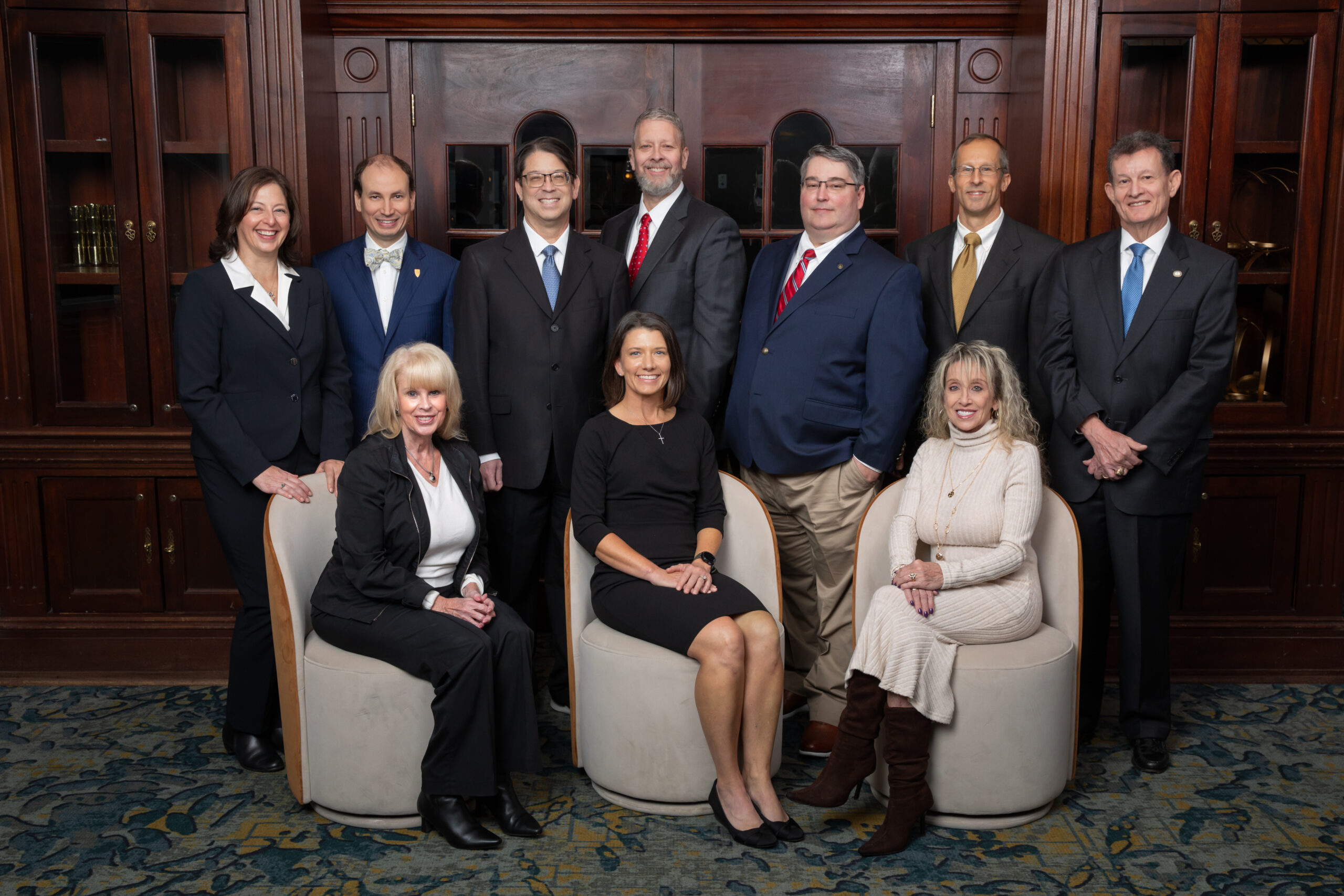
 Kim, Lahey & Killough Law Firm is proud to announce that we have been named the Best Intellectual Property Law Firm in South Carolina by Greenville Business Magazine, Columbia Business Monthly, Charleston Business Magazine, B2B: The Grand Strand and B2B: Pee Dee Business as part of their Best in Business 2025 initiative. This peer and public voting award was announced in the December 2025 issues of the publications.
The firm adds this award to many bestowed in 2025, including:
Kim Lahey Killough named to Best Law Firms
Kim Lahey Killough intellectual property and business attorneys named in Best Lawyers
Kim Lahey Killough attorneys named in South Carolina Super Lawyers
Kim Lahey Killough attorneys named Legal Elite by Charleston Business Magazine and Greenville Business Magazine
Firm Attorneys named in Greenville Top Lawyers by TALK Greenville
We are thankful for the trust and endorsements of our clients, peers, and associates.
With offices in both Greenville and Charleston South Carolina, Kim, Lahey & Killough Law Firm is devoted to helping clients establish, enforce, and leverage their intellectual property rights from the Upstate to the Lowcountry to across the globe. The firm serves the manufacturing, software, energy, finance, hospitality, tourism, defense, agriculture and technology industries as well as universities. Key practice areas include intellectual property, corporate and business matters including formation and structure, mergers and acquisitions, contracts, cybersecurity, franchising, business, commercial and intellectual property litigation, and mediation.
 by Kim, Lahey & Killough Law Firm
Kim Lahey Killough Listed in 2026 Best Law Firms
Kim, Lahey & Killough Listed in 2026 Best Law Firms
The Kim, Lahey & Killough Law Firm is pleased to be named in the 2026 edition of Best Law Firms® for the Greenville and Charleston, South Carolina markets.
The firm is recognized for its work in the following areas:
Charleston, South Carolina office
- Litigation – Intellectual Property
- Trademark Law
- Business Organizations (including LLCs and Partnerships)
- Corporate Law
Greenville, South Carolina office
- Litigation – Intellectual Property
- Trademark Law
- Copyright Law
- Litigation – Patent
- Commercial Litigation
- Patent Law
With offices in both Greenville and Charleston, SC, Kim, Lahey & Killough Law Firm is devoted to helping clients establish, enforce, and leverage their intellectual property rights from the Upstate to the Lowcountry to across the globe. The firm serves the manufacturing, software, energy, finance, hospitality, tourism, defense, agriculture and technology industries as well as universities. Key practice areas include intellectual property, corporate and business matters including formation and structure, mergers and acquisitions, contracts, cybersecurity, franchising, business, commercial and intellectual property litigation, and mediation.
 by Kim, Lahey & Killough Law Firm
Kim, Lahey Killough attorneys listed 2026 Best Lawyers
Kim, Lahey & Killough attorneys listed in 2026 Best Lawyers
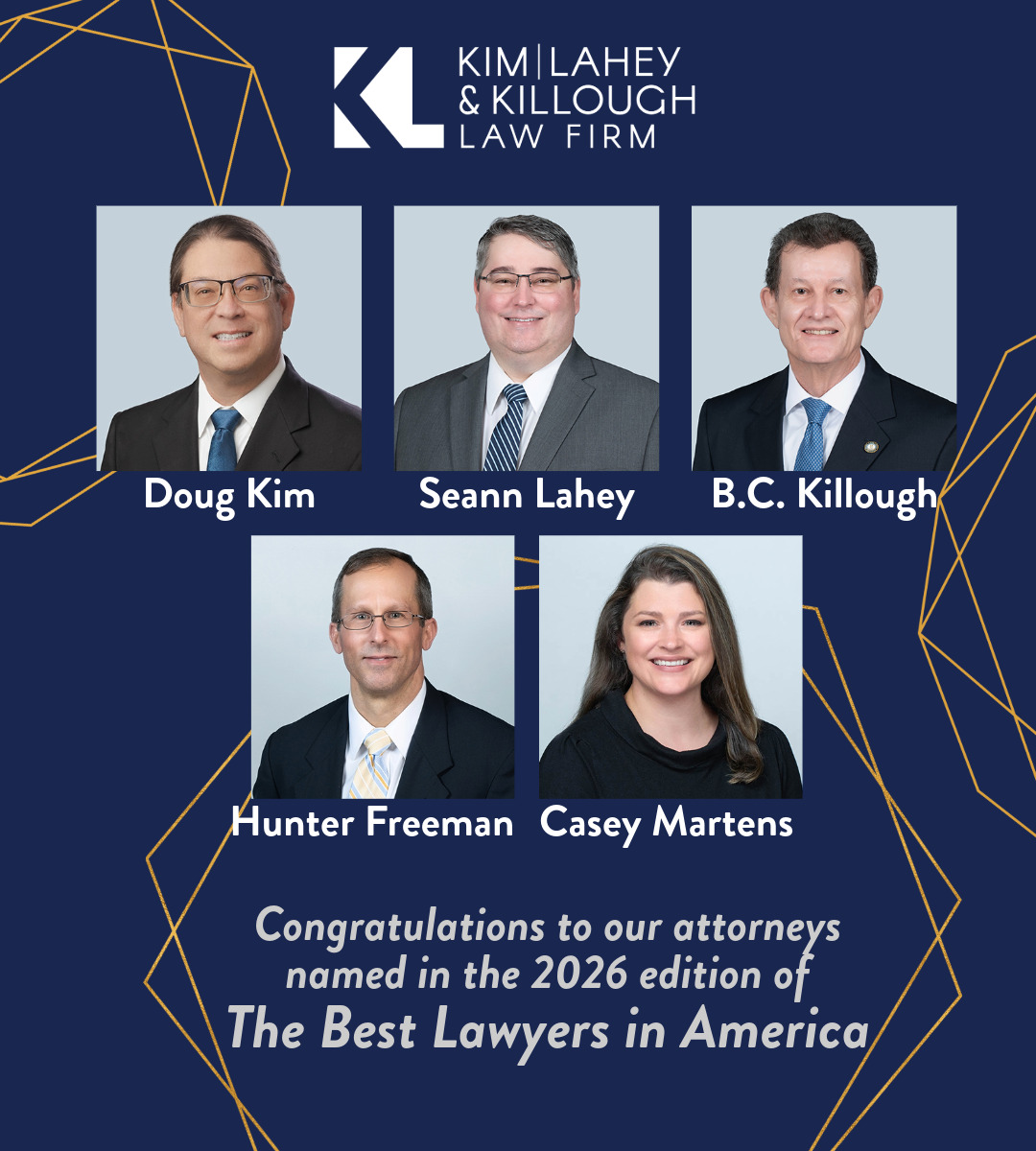
 Kim, Lahey & Killough Law Firm is honored to announce that five of the firm attorneys are listed in The Best Lawyers in America® 2026 edition:
In the firm’s Greenville home office, firm founder Douglas W. Kim is recognized for his work in
- Litigation – Intellectual Property
- Litigation – Patent
- Patent Law (Lawyer of the Year, 2019)
- Trade Secrets Law
- Trademark Law (Lawyer of the Year, 2022)
Firm co-founder, Seann Lahey is listed for his work in:
- Patent Law
- Trademark Law
And Greenville patent attorney Hunter S. Freeman is commended for his work in:
- Commercial Litigation
- Copyright Law
- Litigation – Intellectual Property
- Litigation – Patent
- Trademark Law
In the firm’s Charleston office, Charleston patent attorney B. C. Killough celebrates his 15th year on the Best Lawyers list for his work in:
- Business Organizations (including LLCs and Partnerships)
- Corporate Law (Lawyer of the Year, 2015)
- Litigation – Intellectual Property
- Patent Law
- Trademark Law
Licensed in South Carolina, North Carolina and Georgia, Casey Martens heads up the firm’s Brevard, NC office. She is recognized by Best Lawyers in the Greenville, SC metro as a 2026 Best Lawyers One to Watch in America in the areas of:
- Employee Benefits Law
- Intellectual Property Law
- Labor and Employment Law – Employee
- Labor and Employment Law – Management
- Litigation – Labor and Employment
Since 1981, The Best Lawyers in America® and Best Lawyers: Ones to Watch® in America has compiled and reviewed peer evaluations from across the United States to identify an annual list of honorees. This year, over 31 million evaluations were analyzed, including a record-breaking 4.8 million new responses.
About Kim, Lahey & Killough
With offices in Greenville and Charleston, SC and Brevard, NC, the Kim, Lahey & Killough Law Firm is devoted to helping clients establish, enforce, and leverage their intellectual property rights from the Upstate, to the Lowcountry to across the globe.
 by Kim, Lahey & Killough Law Firm
All attorneys listed as 2025 Legal Elite
Entire Kim, Lahey & Killough attorney team listed as 2025 Legal Elite by Charleston Business and Greenville Business Magazines
 Kim, Lahey & Killough is proud to announce that each of their eight attorneys has been named in the 2025 Legal Elite lists with all five of the firm’s registered patent attorneys recognized as Legal Elite in Intellectual Property and Innovation by Greenville Business Magazine and Charleston Business Magazines. “There are only a select few firms in South Carolina that are boutique intellectual property firms and to have our entire team recognized by our peers in Legal Elite is quite an honor. This recognition confirms the commitment we have to our clients and to providing excellent legal services that help our clients create and protect their intellectual property. This reaffirms our continuing commitment to our clients to assist them with matching legal strategies with their business goals to grow their companies and innovations,” commented firm founder, Doug Kim.
The IP attorneys named Legal Elite include firm founders Doug Kim and Seann Lahey as well as B.C. Killough, Hunter Freeman, and Robert Merting.
In addition to the firm’s core intellectual property practice, the firm supports businesses with corporate counsel. Business attorneys Casey Martens, Anthony Nolte and Emily Bohan were each recognized for their work in corporate matters: Casey was named for her work in Employment Law – Defendants and Emily Bohan was listed for Corporate Law – Business Organization matters.
Greenville business attorney Anthony Nolte rounds out Kim, Lahey & Killough’s whole team of Legal Elite, named for his work in Corporate Law-Merger & Acquisitions. Licensed in both South Carolina and Texas, Tony is a former business and financial executive as well as in-house counsel for Shell, among other successful ventures. He concentrates his legal work in the areas of company structure and formation, start-ups, early-stage and growth companies, corporate governance, mergers, divestitures, and acquisitions, financings, franchising & licensing, contracts, business succession, business disputes & resolutions. Outside of the office, Tony Nolte is an Angel Investor, teaches as an adjunct professor at Furman University, mentors startups in the Greenville ecosystem, serves as a limited partner in the Greenville Next Founders Fund I and is a member of VentureSouth.
The Legal Elite are selected annually through peer nominations from attorneys throughout the state of South Carolina in 50 legal practice areas.
About Kim, Lahey & Killough
With offices in Greenville and Charleston, SC and Brevard, NC, the Kim, Lahey & Killough Law Firm is devoted to helping clients establish, enforce, and leverage their intellectual property rights from the Upstate, to the Lowcountry to across the globe.
 by Kim, Lahey & Killough Law Firm
Seann Lahey named to GSSM Board
Kim, Lahey & Killough congratulates Greenville registered patent attorney and firm founder Seann Lahey, who has been elected to the South Carolina Governor’s School for Science & Mathematics (GSSM) Foundation board of directors for 2025-2026.
 Seann Lahey is known for his work in STEM fields as an intellectual property attorney. He has extensive experience dealing with international and U.S. patent prosecution, trademarks, copyrights, trade secrets, licensing of intellectual property rights, and rendering legal opinions on validity, infringement and enforceability of intellectual property rights, as well as IP litigation.
What’s more, Seann is a parent of a recent alum of the GSSM, affording him the ability to advocate for the school from multiple perspectives. “I’m deeply honored to join the Foundation Board of Directors for GSSM,” he commented. “As a parent of a GSSM alum, I can attest to the incredible work and dedication of everyone involved with the school. I look forward to contributing to our shared mission of fostering academic excellence and supporting the brilliant minds of tomorrow.”
Beth Dinndorf, executive director of the GSSM Foundation, added, “We are grateful to the new directors, the new board officers, and all members of the GSSM Foundation Board of Directors for their leadership and commitment to the mission of GSSM and the students it serves. Their collective talents and contributions help GSSM remain the top-ranked public high school in South Carolina, providing an exceptional STEM education to more than 10,000 students in grades 3 through 12 each year.”
About Kim, Lahey & Killough
With offices in Greenville and Charleston, SC and Brevard, NC, the Kim, Lahey & Killough Law Firm is devoted to helping clients establish, enforce, and leverage their intellectual property rights from the Upstate, to the Lowcountry to across the globe. For more information, visit the firm website at kimandlahey.com .
About the South Carolina Governor’s School for Science & Mathematics
 The South Carolina Governor’s School for Science & Mathematics (GSSM) is a nationally ranked top 10 public high school that exists to bring world-class STEM education to students across the state. Founded in 1988 by Gov. Carroll Campbell, GSSM is a state resource that offers a variety of programs including an intensive two-year residential high school, a challenging virtual engineering program, summer camps, and in-school experiences for students in 3rd through 12th grades. The GSSM Foundation advocates for GSSM and provides funds and support to enhance its programs and students’ educational endeavors. Learn more at www.scgssm.org. Read GSSM’s press release announcing the 2025-2026 Board here.
 by Kim, Lahey & Killough Law Firm
Your Client Used AI to Learn about the Law
Your client used AI to Learn about the Law – What next?
 In an article for The American Bar Association, Kim, Lahey & Killough firm founder Doug Kim discusses the growing use of AI tools by clients and how it is reshaping the attorney-client relationship, bringing both challenges and opportunities.
As clients increasingly rely on AI for legal information, attorneys must understand how these tools function in order to effectively address any inaccuracies or outdated information that clients may present. At the same time, by embracing AI themselves, attorneys can not only improve their practice but also better meet evolving client expectations and strengthen their role as trusted advisors. An excerpt is below. ABA members may read the entire article here.
AI summary:
As clients increasingly use generative AI to understand litigation, attorneys face a pivotal shift in managing expectations, communication, and authority. A case study illustrates how an engaged client used AI to research legal concepts, evaluate motions, and suggest strategies—prompting both challenges and opportunities. Attorneys who understand AI’s capabilities and limitations can better guide clients, clarify misunderstandings, and leverage these tools to foster transparency and collaboration. Rather than resisting AI, lawyers should embrace informed dialogue, set boundaries early, and use client-generated content as teaching moments. Failure to engage risks loss of trust, communication breakdowns, and even malpractice exposure. With technical literacy and proactive strategy, attorneys can transform AI-informed clients into empowered partners, reaffirming the indispensable role of legal counsel while embracing the evolving landscape of client education through technology.
Excerpt:
Clients are becoming increasingly sophisticated in how they engage with attorneys. We have seen clients turning to generative AI to improve their understanding of litigation, a trend that, while assisting the client feel more confident and engaged in the process, is creating some issue for the practicing attorney.
An Example
In a complex commercial litigation matter, the client, an experienced business owner but not a legal professional, sought to gain a better understanding of the case. Rather than relying solely on attorney updates, the client began using generative AI to:
- Research laws and cases
- Understand actual and potential causes of action and defenses
- Verify that the legal strategy being executed aligned with general legal principles
Using accessible, public, conversational AI tools, the client submitting prompt to the AI agent such as:
- “What is a breach of fiduciary duty?”
- “What defenses exist to a tortious interference claim?”
- “What happens after a motion to dismiss is denied?”
- “Can you analyze this complaint and let me know if these are winning arguments?”
- “What are my chances of winning?”
- “How much should this cost?”
Typically, the AI agent provided clear, plain-English explanations with reference to legal research information, providing the client with foundation knowledge and context for the decisions their legal team was making. With this knowledge, the client felt empowered and began “helping: the lawyer with the case.” The client began suggesting legal theories and strategies and engaged in lengthy discussions with the lawyer about the mechanics of litigation using the information gained from the AI Agent. As you can imagine the attorney was not effectively able to have these discussions without a detail explanation of the legal theories, strategies, case law, and litigation process, mostly to handle the newfound education of the client.
Bridging the Information Gap
In this example, the client was unintentionally substituting AI for legal advice and sought to assist the attorney with the ”helpful” AI generated information. For example, after receiving a litigation update about a motion being filed, the client used AI to analyze the motion, explain the motion, understand the standard of review and how courts ruled in similar situations.
The client “ran” the legal documents through its AI agent and asked the AI engine to “grade” the legal work and to analyze the legal work for completeness. The client then questioned why a certain counterclaim was not being raised that were suggested by AI. As it turned out, the attorney had considered these claims but determined they were not viable based on specific jurisdictional factors, something the AI could not do.
This engagement has the potential to disrupt the attorney-client relationship, but if properly managed, it can strengthen it. The client was seeking to be more engaged and asked questions based on a general understanding of the law which, while being more time consuming, resulted in better communications and helped the client feel more in control.
While a lawyer should not provide work products just to be graded by AI, understanding the client needs, the technology used and the basis for the activity by the client can strengthen the relationship. Unfortunately, for the bar, this requires us to become knowledgeable about this newest tool. While I have a computer science background, I understand that most of the bar is English, History, Political Science majors that may not have such a background. But, it can be learned.
First, an attorney with sufficient knowledge of the tool is better equipped to understand the underlying algorithms, data structures, and computational logic that drive generative AI tools. The attorney needs to have a basic understanding of the reliability of AI-generated outputs, ensuring they align with case-specific and jurisdictional requirements. There needs to be an understanding of the limitations and inaccuracies in AI responses that a layperson or non-technical attorney may overlook. Attorney’s need to understand that clients are adopting AI must faster than the legal industry.
By understanding AI tools and how clients are using them, the attorney can effectively translate client input into actionable questions for the AI, ensuring more precise outputs. Attorneys can also become better at integrating AI into their litigation strategies to complements the legal process, not disrupt it. The attorney can explain to the client what the response form the AI may not be exactly what should be presented to a court, used in legal filings and other weaknesses of AI.
The full article is available to American Bar Association members here.
 by Kim, Lahey & Killough Law Firm
Four attorneys named to Greenville 2025 Top Lawyers list
Four Kim, Lahey & Killough attorneys were named to TALK Greenville Magazine’s 2025 Top Lawyers list. Researchers identified attorneys held in the highest esteem by their peers and then vetted them to produce the list. This peer-nominated list recognizes the “top lawyers” in the Upstate in a variety of practice areas.
Kim, Lahey & Killough attorneys selected to the 2025 Top Lawyers list and their respective practice areas include: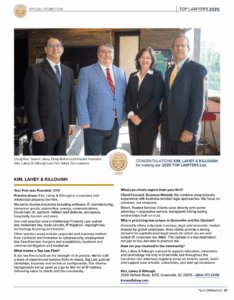
Doug Kim – Technology Virtual
Seann Lahey – Intellectual Property Rights
Hunter Freeman – Intellectual Property Rights
Emily Bohan – Business Law
A profile of the firm featured on page 99 of the 2025 Top Lawyers August issue of TALK Greenville magazine.
About Kim, Lahey & Killough
With offices in Greenville and Charleston, SC and Brevard, NC, the Kim, Lahey & Killough Law Firm is devoted to helping clients establish, enforce, and leverage their intellectual property rights from the Upstate, to the Lowcountry to across the globe.
 by Kim, Lahey & Killough Law Firm
Adopting AI – South Carolina Lawyer
ADOPTING AI: IT’S NOT IF – IT’S HOW
In an article for South Carolina Lawyer, Kim, Lahey & Killough firm founder Doug Kim discusses the risks and rewards of the responsible use of AI for attorneys and law firms. While most in the legal profession bring a cautious approach to the use of AI, this article expounds on the positive benefits of the use of the transformative technology for both attorneys and their clients.
Will AI replace lawyers? No. AI will not replace lawyers but instead will serve as a powerful tool to enhance their capabilities, much like how a high-quality instrument amplifies a professional musician’s training and expertise. AI cannot replace the essential human elements of legal practice. Complex legal matters require nuanced judgment, ethical reasoning, and the personal connection that only human lawyers can provide. AI lacks the ability to make decisions based on empathy, interpret circumstances subjectively, or understand the professional responsibilities that guide legal practice. These human elements remain irreplaceable and essential to effective legal representation.
What AI can do is make lawyers more effective and efficient.
When properly implemented by skilled professionals, AI can automate routine tasks such as legal research, document review, and initial drafting, allowing attorneys to focus on complex strategic work that requires human judgment, ethical reasoning, and personal client relationships.
However, skilled implementation is key as recent court cases involving fabricated AI-generated citations underscore the critical importance of proper training, verification and human oversight.
For clients, responsible AI adoption translates to more efficient service delivery, reduced costs, and higher quality representation, as smaller firms can compete more effectively with larger ones by leveraging technology.
The legal profession is moving toward a future where firms that embrace AI responsibly will provide superior service at competitive rates, while those that resist this evolution risk falling behind.
Ultimately, AI represents not a threat to the legal profession but an opportunity to deliver better outcomes more efficiently, provided it’s implemented with the skill, oversight, and ethical standards that effective legal practice demands.
Read the entire article below, or online here on pages 32-35 and 45 of South Carolina Lawyer.
And Part Two of this article may be read in the July 2025 issue of SC Lawyer here.
ADOPTING AI: IT’S NOT IF – IT’S HOW
by Doug Kim for South Carolina Lawyer Magazine, a publication of the South Carolina Bar.
Last year, Thomson Reuters released a report[1] stating that 82% of lawyers surveyed said AI can be applied to legal work, but only 51% said that it should. That leads to two questions. What can technically do and what are its risks and rewards? Second, how should lawyers use AI? Part 1 of this article addresses the first question. Part 2, which will appear in an upcoming issue of South Carolina Lawyer, provides my views on the latter question.
Circulating among the profession is the fear that AI will just replace lawyers entirely. This is simply not true. Medium and high complex legal tasks require nuanced understanding, interpretation, and application of the law to specific facts, which are skills that AI lacks. AI cannot make judgment calls based on ethical considerations, empathy, and subjective interpretations of circumstances; these human aspects of legal practice cannot be replicated. Further, AI cannot replace the personal connection that lawyers establish with their clients. Importantly, lawyers are bound by rules of professional responsibility, including confidentiality, competent representation, and client advocacy. AI lacks the ability to honor – or indeed even comprehend – these obligations.
If AI will not replace lawyers, then what good is it? AI is a technology that underlies the next generation of tools to be used in the legal profession. Like all tools, the education, experience, and skill of the user makes a dramatic impact on the effectiveness and quality of the work product created with the tool. For example, a professional musician would benefit greatly from the dramatically improved performance of a Jackson Soloist guitar as the Jackson provides better tone, performance, speed and overall playability. A novice would unlikely know the difference and the performance of the novice would not be materially improved.
According to one McKinsey report, skilled users can leverage AI to replace up to 30% of their work, leading to increased efficiency and productivity – the operative work being “skilled.” AI is not a substitute for education, experience or skill. While AI can accelerate education and skill development in the legal process by automating routine tasks and allowing legal professionals to focus on more complex and strategic aspects of their work, it is not a substitute. Without this requisite skill, the AI tool results in little benefit and can even provide a determent.
The real world provides examples of this risk. Just ask the lawyers that, despite clear judicial warnings and sanctions, continue to submit AI-generated court documents with fabricated (also called “hallucinatory”) content. For example, in Kohls v. Ellison, 2025 U.S. Dist. LEXIS 4928 * (D. Minn. Jan. 25, 2025), the expert witness admitted that his declaration inadvertently included citations to two non-existent academic articles, and incorrectly cited the authors of a third article. These errors apparently originated from use of GPT in drafting his declaration and the expert failed to verify these fake citations to academic articles before including them in his declaration.
Indeed, the problem has affected how judges take testimony. In In re Matter of Weber, 2024 NY Slip Op 24258 (N.Y. Surrogates Ct. Oct. 10, 2024), the trial court refused to accept as accurate without more back-up calculations performed by artificial intelligence. The court stated that due to the nature of the rapid evolution of artificial intelligence and its inherent reliability issues, before evidence which has been generated by an artificial intelligence product or system is introduced, counsel has an affirmative duty to disclose the use of artificial intelligence, and the evidence sought to be admitted should properly be subject to an admissibility hearing prior to its admission.
Properly used, AI tools can help lawyers automate manual processes and work more efficiently. For example, when using the AI tool for patent application drafting, more time should be spent at the beginning on the drawings of a patent application and generating a bullet point documents of key features of the invention’s structure and function that are novel and non-obvious (patentability requirements). This shift changes how patent lawyers invest their time, but they do it to more effectively use the AI tool.
Similarly, AI-powered case law research tools can help lawyers more easily find leading case law and guiding legal principles than old-fashioned Boolean searches, but only if lawyers can move away from that conceptual framework. Otherwise, a search term mentality fails to take best advantage of the tool.
Just as important – and unlike traditional computer-aided research – AI can suggest the best language to support arguments. Indeed, AI can also help lawyers quickly produce initial drafts of motions, legal briefs, contracts, and settlement agreements, which in the past have been time intensive. Improper use of AI, however, will cause the output to be either less useful or even counterproductive.
 More generally, AI will change how legal services are provided. Routine tasks, such as legal research, document review, and billing can become automated, allowing lawyers to focus on more complex and strategic aspects of their work, especially those that require critical thinking based upon the facts and circumstances of the parties’ case and desired outcome. AI can assist in predicting case outcomes, advising clients, and developing informed strategies. All that requires, however, that lawyers re-order what they do and how they do it. If a lawyer traditionally spends 30% of her time in complex cases reviewing documents, it will require substantial willpower to pivot to a profoundly different allocation of time.
This will also impact the profession as a whole. While not replacing lawyers, AI will create a demand for lawyers with specialized skills in areas that require complex problem-solving, critical thinking, negotiation, and dispute resolution. Substantively, with AI fulfilling some of the more mundane tasks and day-to-day needs, the need for “specialized” areas (e.g., tax, securities, environmental, employment, intellectual property, complex litigation, and the like) will increase. But that also means that lawyers who have made a good living out of routine tasks will face an increasing challenge.
I experienced a movement years ago when I was a computer programmer prior to becoming a lawyer. The same positions were being put forward that AI was going to replace computer engineers. This did not happen. In computer science, AI, especially large language models like Chat-GPT, proved to be just another tool in the toolbox and made experienced programmers more efficient and accurate, enhanced code quality, reduced development costs, reduced time to market, improved quality control and generally made for a better work-product; especially experienced programmers. Properly implemented, AI will do the same for the legal profession. AI will not replace the lawyer.[2] However, attorneys that adopt AI will replace those that do not.
Further, the smaller law firm will become more competitive through leveraging technology just as we saw with online research, communications tools, timekeeping and billing, and practice and case management software. By automating certain tasks, smaller firms can take on more clients without needing additional resources and can maximize profitability while delivering improved legal services to clients. This levels the playing field and allows smaller firms to compete with the larger ones so that the dreaded overhead of the larger firm will become even more of a burden that results in higher fees and less value to the client.
This is not to say that the transition will not be bumpy. While adopting technology eventually reduces overhead and provides more value to clients, the legal profession has always faced challenges when it comes to innovation and technology. Further, most of the bar was licensed prior to the release of the iPhone.[3] This “slow to adopt” challenge stems from the reality of technical competence, or lack thereof, and the resistance to change which stems from being severely risk averse.
In 2017, the Association of Corporate Counsel published A Seat at the Head of the Table: From Lawyer To CEO? and stated, “Risk aversion. Most law firm cultures are built around a strong bias to risk aversion. However, … lawyers must expand their perception from ‘no’ to ‘yes,’ even if the next question is “how?”[4] While this publication was discussing lawyers transitioning to CEOs, it is applicable to the current discussion of whether to “use” AI. It is not a matter of yes or no, but rather when and how. While lawyers didn’t go to law school to be computer programmers, the technical requirements of modern legal practice cannot be ignored.[5] By analogy, the craftsman who used hand tools for many decades may be slow to adopt power tools for the same reasons that lawyers will be slow to adopt AI: habit, inertia, fear of change, inflexibility, etc. Yet history shows that those who adopted power tools surpassed those who did not in short order.
Disruptive technologies are just that – disruptive – and seeing the coming changes and being open to this disruption in the legal industry is critical. Disruption often comes without warning and is not anticipated by the masses. A quote often attributed to Henry Ford is, “If I had asked people what they wanted, they would have said faster horses.” Adapting to disruptive technologies is important to success and potentially the survival of the modern law firm.
AI is growing faster in its development than prior disruptive technologies. This creates both risks which are manageable and opportunities which will further the profession. These risks can be effectively managed with a few simple guiding principles:
- Understand how the AI works, including its training model and limitations.
- Implement AI to a specific application and avoid general, open AI tools.
- Make sure you are always in control of the technology and be accountable for its use (avoid the chatbot).
- Try to only use specific AI that has private, dedicated connections to large language models (as opposed to public data lakes like used by ChatGPT).
- Use AI tools that do not use your input to train with the AI engine and keep input confidential.
- Always have a live person review the content and work product.
The power of AI and the benefits that it can bring will create a separation in the legal profession, split into those that properly adopt AI and those that do not. The split will manifest in lawyers’ ability to deliver higher quality legal services and work product, the faster delivery of work product, and less costs; each of which impact referrals, reputation, and client satisfaction. Reuters reports that clients expect their lawyer to lead the charge in leveraging AI for the client’s benefit.[6] Clients will expect law firms to use AI due to the potential reduction in cost and time savings. The law firm that responds to these demands will have a significant advantage over those that do not. Adopting AI will also lead to changes in billing practices, and we will see more firms move to alternative fee arrangements such as a flat fee billing arrangement.[7]
Read the entire article online here on pages 32-35 and 45 of South Carolina Lawyer.
And Part Two of this article may be read in the July 2025 issue of SC Lawyer here.
Doug Kim , a Physics major from Davidson College, began his professional career as a computer programmer and software engineer. His intellectual property career began in 1998 when he combined his business experience with his legal education and was involved with enforcing a client’s patent against multiple infringers. Since then, Doug has created a well-rounded IP practice that provides legal solutions and strategies tailored to each client from multinational corporations to start-ups.
[1] New report on ChatGPT & generative AI in law firms shows opportunities abound even as concerns persist, Thomson Reuters, April 17, 2023.
[2] In all fairness, we should see a reduction in the needs for support staff and junior associates. These roles typically involve administrative, repetitive tasks that AI can now perform with greater efficiency and cost effectiveness.
[3] The iPhone was first released June 29, 2007.
[4] A Seat at the Head of the Table: From Lawyer To CEO, by David Felicissimo, Association of Corporate Counsel, 2017.
[5] See CLE requirements in North Carolina for Lawyers, NC Continuing Legal Education (showing that lawyers in North Carolina must complete one hour of CLE in Technology every two years.) https://www.nccle.org/for-lawyers/requirements/renewing-lawyers/
[6] AI: the new legal powerhouse — why lawyers should befriend the machine to stay ahead by Jeremy Glaser and Sharzaad Borna, Thomson Reuters
[7] I appreciate the natural financial friction where the lawyer will pay for AI just to be able to charge less. However, while beyond the scope of this article, AI will have an impact on the adoption of alternative fee arrangements. I have been providing flat fee arrangements for decades and trust me, there is nothing to fear.